
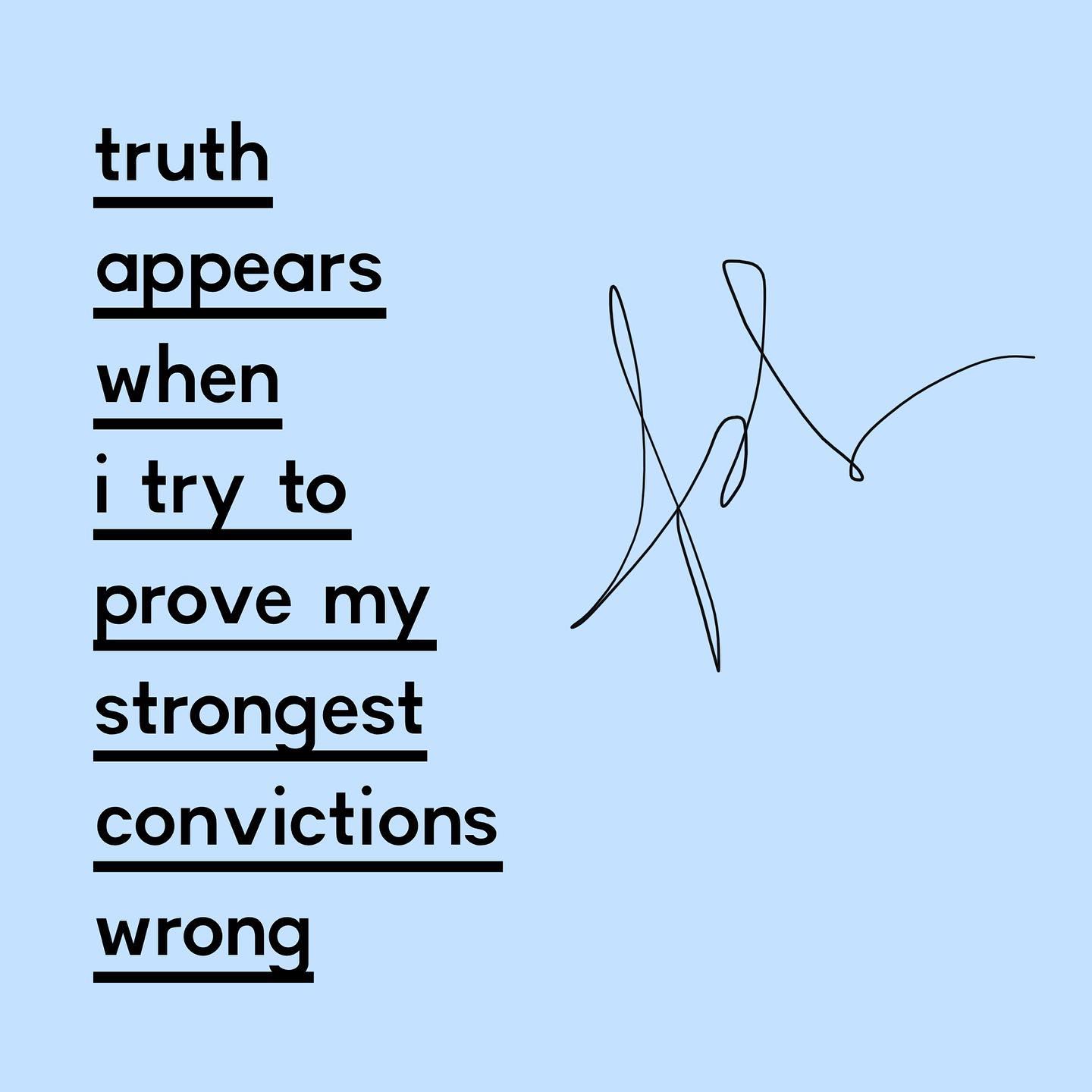
What if everything I think I believe is wrong? Being open minded starts with that question.
It’s uncomfortable to feel uncertain. That’s why firmly planting into a worldview feels so good. There’s a feeling of safety in certainty.
But my most profound realizations have happened in the wake of challenging my current beliefs.
Case Closed, Until It Wasn’t
There have been many times in my life where I was absolutely certain I was right without question. Case closed.
And then new information presented itself in a way that was incredibly uncomfortable at first, followed by a feeling of illumination and relief.
The update was always better than the original belief. But I never would have found it without being open minded enough to question what I thought I knew.
This pattern has repeated so many times that I’ve started to expect it. Whatever I believe now will probably be refined by something I haven’t encountered yet. That expectation itself is a form of openness.
The Discomfort of Not Knowing
Being open minded requires tolerating uncertainty. Your nervous system wants to resolve things quickly. It grabs onto beliefs because ambiguity feels threatening.
But certainty is often just anxiety wearing a mask. You’re not sure, so you pretend to be sure, and call it conviction.
Real confidence can hold uncertainty. It doesn’t need to know everything to feel okay. That’s the difference between open and closed minds.
The closed mind needs resolution at any cost. It will accept a wrong answer over no answer, just to end the discomfort. The open mind can wait. It can sit with questions that have no immediate answers.
Identity and Belief
The hardest beliefs to examine are the ones tied to your identity. If being right about something is part of who you are, questioning it feels like self-destruction.
But you are not your beliefs. You are the awareness that holds them. Being open minded means recognizing this distinction. You can update beliefs without losing yourself.
In fact, the self that emerges from honest questioning is more solid than the self that hides behind unexamined certainties. Tested beliefs are stronger than inherited ones.
The Practice
Pick a belief you hold strongly. Ask yourself: what would have to be true for this to be wrong?
You don’t have to change your mind. Just entertain the possibility. Being open minded means you can explore an idea without adopting it. You can question without abandoning.
That flexibility is where new insight lives. Rigid certainty blocks it. Open exploration invites it.
Try this: spend ten minutes arguing the opposite of what you believe. Really try to make the best case for the other side. Notice what happens in your body. Notice what resistance arises. That’s where the work is.
Why This Matters
The world changes. Reality updates. If your beliefs can’t update with it, you get left behind, defending positions that no longer serve you.
Being open minded isn’t about having no convictions. It’s about holding convictions loosely enough to revise them when better information arrives.
The update is always better than the original. But you have to be willing to receive it.
This willingness is itself a kind of faith. Faith that the truth will serve you better than comfortable illusions. Faith that you can handle whatever you discover. That faith makes growth possible.
This is where growth happens.
Explore the shadow work practices for developing the capacity to hold uncertainty.