
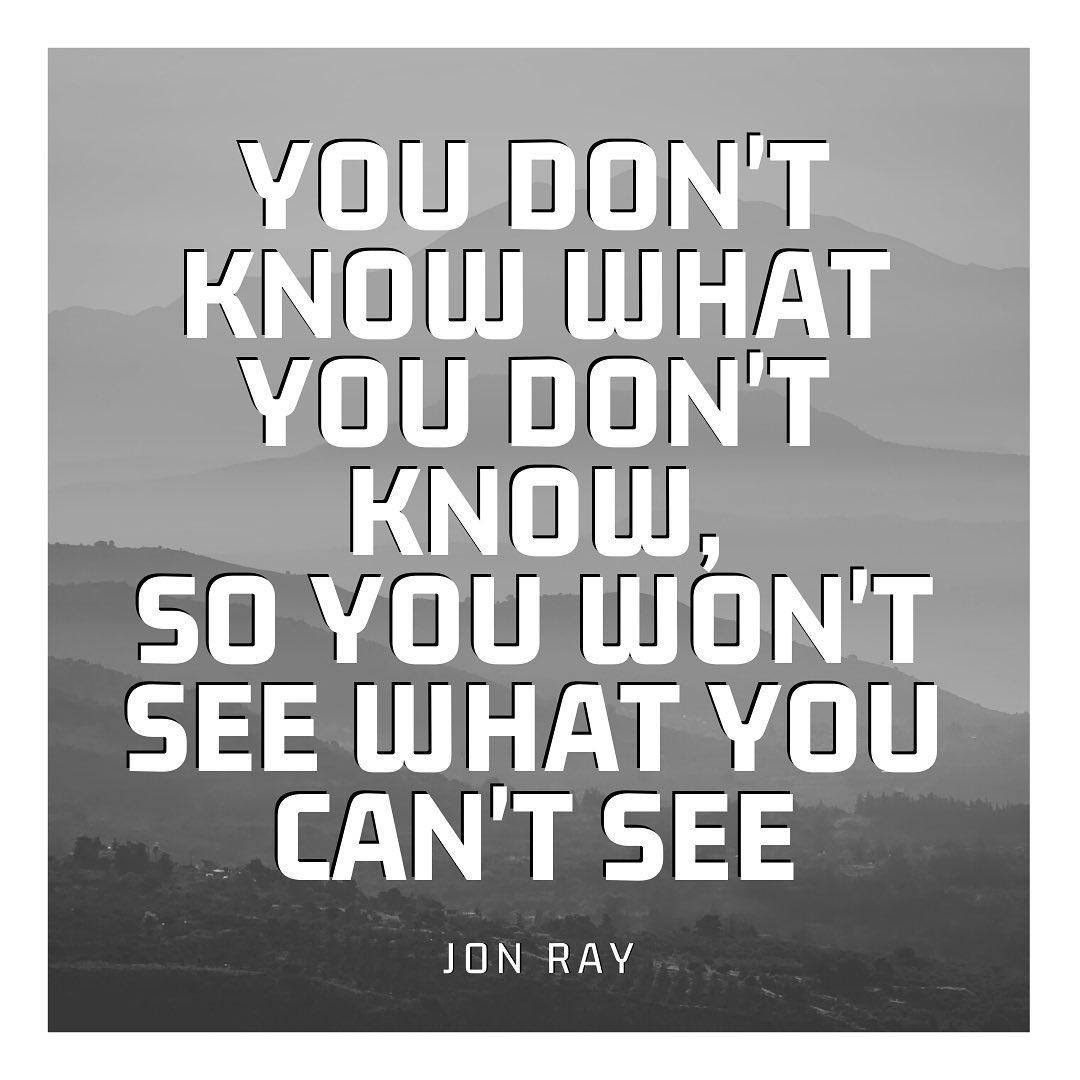
I have been really cocky and arrogant about a lot of things that turned out to be wrong.
How is it that I could have so much confidence in something, only to much later come to an awareness that I was not even in the same ballpark as the truth?
The Efficient Brain
Perhaps it is because our brains are incredibly efficient and only pick out the data points that match our current strategy for living.
This isn’t a flaw. It’s a feature. If we processed every piece of information equally, we’d be overwhelmed before breakfast. So the brain filters. It selects. It shows us what confirms what we already believe and quietly ignores the rest.
The problem is that this efficiency makes us blind to our own blindness. We don’t see what we’re not seeing. We think we’re looking at reality when we’re actually looking at a carefully curated slice of it.
The Practice of Intellectual Humility
I try to practice intellectual humility by getting my brain to point out new data points by actually looking for things that I may not have seen before.
This takes effort. The brain doesn’t naturally seek out information that contradicts its existing beliefs. You have to consciously override the default. You have to ask questions like: What if I’m wrong? What would I expect to see if my belief wasn’t true? What am I not seeing because I’m not looking for it?
These questions feel uncomfortable. That discomfort is often a sign you’re onto something.
The Street Sign I Never Noticed
Today I saw a street sign with a street name I have driven by every single day for months and never noticed until this morning.
I was genuinely surprised to see it.
This small moment captures something important. If I can miss a physical sign that’s been in front of my face for months, what else am I missing? What beliefs am I holding that seem obviously true, but only because I’ve never looked for evidence against them?
I ask my brain to show me new data points and to present information that will convince me of new strategies which might prove more advantageous.
A Prayer for Truth
This is one of my primary uses for prayer as well:
“God, show me the truth today, even if it means everything I think I know is wrong.”
This prayer scares me every time I say it. And I mean it every time. Because I’ve been wrong enough times to know that certainty isn’t the same as accuracy. My confidence in a belief tells me nothing about whether the belief is true.
From this stance of intellectual humility, new data points and perception can be brought into focus. And the answers I have been seeking can be found.
The Ongoing Practice
Intellectual humility isn’t something you achieve once. It’s a daily practice. A constant willingness to hold your beliefs loosely, to stay curious, to keep looking for the street signs you’ve been driving past without noticing.
The alternative is stagnation. Defending positions you formed years ago with information you no longer remember. Being right becomes more important than finding truth. And you miss the growth that comes from discovering you were wrong.
This is the Bible Mystic way.
If you’re ready to explore a different relationship with God, visit the Bible Mystic series.