
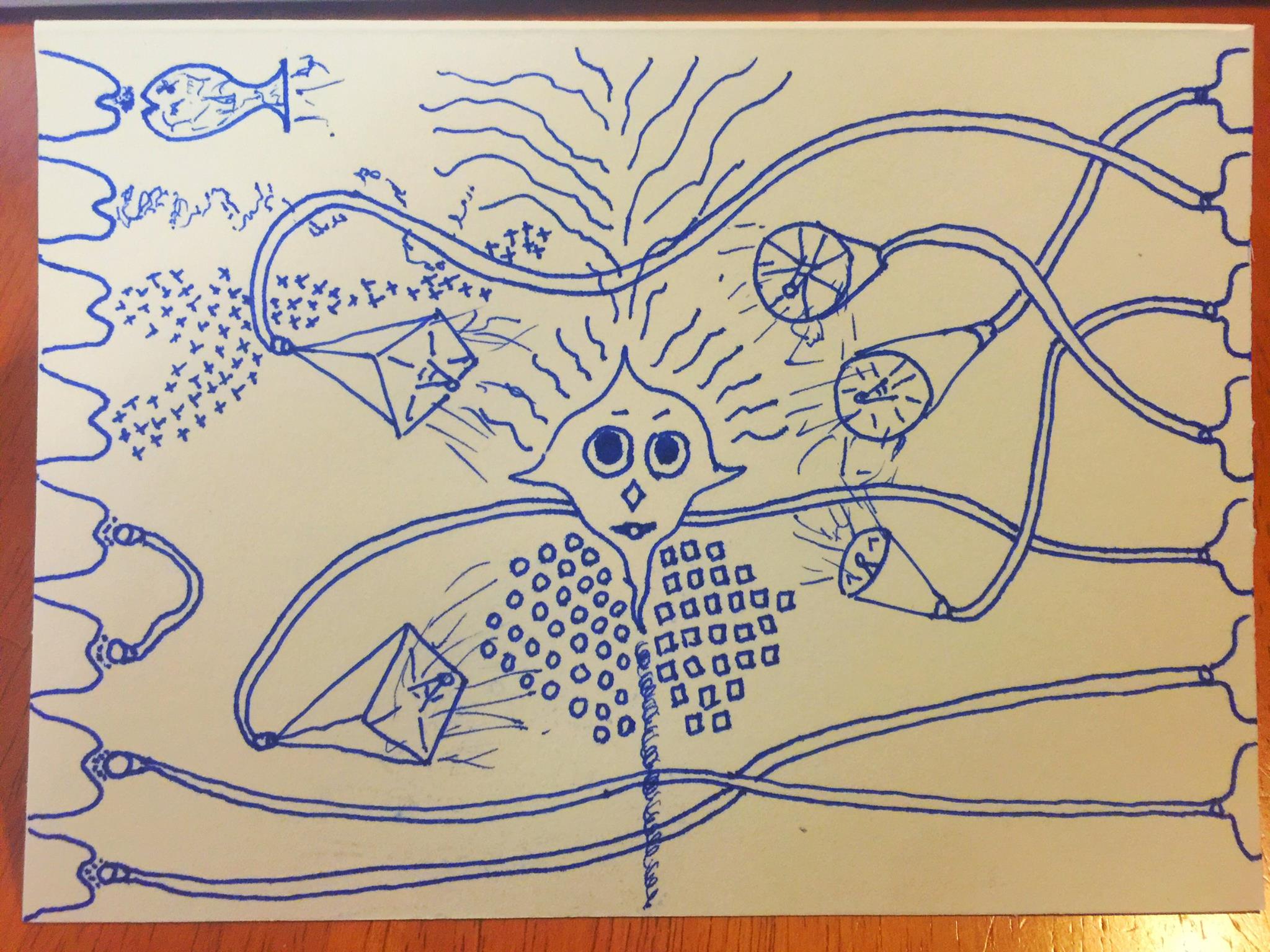
One very simple way I’ve used to grow the muscle of intuition and creativity within is allowing myself time to just doodle without any expectation of outcome.
It sounds almost too simple to be effective. But that’s the point. Intuition doesn’t respond to force or strategy. It responds to space.
The Doodle Practice
Spending time with a blank page a few times a week simply creating designs, doodling, and drawing things has been a fabulous practice for learning to visualize better and receive creative thought packets.
It’s also a great way to pull myself out of writer’s block or any other creative block. The key is removing all pressure for it to mean anything or become anything.
Just take a small sheet of paper, sit down with it, and don’t get up until the page is full of doodles. No judging what emerges. No trying to make it “good.” Just let the pen move.
What happens is strange. Your conscious mind gets bored and wanders off. It has nothing to grip onto because you’re not trying to accomplish anything. And in that gap, something else starts to speak.
Why This Works
Intuition is always broadcasting. The problem isn’t that we can’t access it. The problem is that we’re too noisy to hear it.
Our analytical minds are brilliant at solving certain kinds of problems. But they’re also control freaks. They want to run the show constantly. Doodling bypasses this. It gives the analytical mind a job that’s too boring to hold its attention.
That’s when intuition slips through. You’ll notice it as sudden knowing. Ideas that arrive fully formed. Solutions to problems you weren’t even consciously working on.
Side Effects
This practice also has a side effect of making your dreams at night more vivid and increases memory recall of those dreams. I didn’t expect this when I started, but it makes sense. You’re building a bridge between the conscious and unconscious mind.
It also puts my brain into a weird place of non-resistance and no-thought which allows new ideas to flow in more easily. This state is valuable beyond the creative benefits. It’s a form of peace.
Meditation and driving for long distances also put me in this place of receptivity. What they share is the absence of agenda. You’re not trying to get somewhere mentally. You’re just present with what is.
Building the Muscle
Intuition is like any other capacity. It strengthens with use and atrophies with neglect. Most of us have been neglecting it for years, trained by a culture that only values what can be measured and explained.
But there’s a whole dimension of intelligence that operates outside logic. It sees patterns your conscious mind misses. It knows things before you have evidence for them.
The doodle practice is an invitation to that intelligence. It says: I’m here. I’m listening. I’m not going to judge whatever you show me.
Start small. Five minutes. A few times a week. Let it be imperfect and strange. That’s the whole point.
Your inner knowing is already there. It just needs you to stop talking long enough to hear it.
Intuition is one doorway to deeper work.
When you’re ready to explore what else is waiting beneath the surface, visit the Shadow Work practices.